Millions of women in India and Southeast Asia are diagnosed late — or not at all — because access to quality cancer diagnostics is scarce, slow, and unequal. We are building the tools to change that.
Cancer diagnosis relies heavily on manual interpretation by experienced pathologists. But there is a global shortage — estimated at 1 pathologist per 15,000–20,000 people even in high-income countries. In low- and middle-income countries like India, the ratio falls to roughly 1 per 100,000 people.
At the same time, cancer incidence continues to rise, with millions of new cases annually. This growing mismatch between demand and capacity leads to diagnostic delays, inconsistent quality, and preventable deaths.
For women's cancers — cervical, breast, and endometrial — early detection can reduce mortality by 30 to 70 percent. Yet many cases are diagnosed late because quality diagnostics are simply not accessible where patients live.
Digital pathology adoption remains low across much of the region, largely due to the high cost of existing solutions from large multinational companies. There is a critical need for scalable, affordable, and AI-assisted diagnostic tools that work in real-world healthcare settings.
The most preventable cancer that still claims hundreds of thousands of lives annually — because screening doesn't scale.
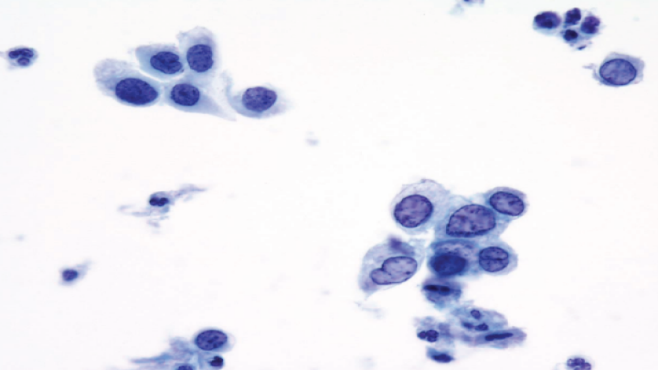
Pap smear cytology — abnormal cervical cells under microscope
Cervical cancer remains one of the leading causes of cancer-related deaths among women worldwide. More than 90% of these deaths occur in low- and middle-income countries, reflecting deep inequities in access to early detection and care. In India alone, cervical cancer claims over 75,000 lives annually — even though it is largely preventable and highly treatable when detected at an early stage.
"Despite the proven effectiveness of Pap smear-based screening, coverage remains critically low due to systemic challenges that AI can directly address."
The most commonly diagnosed cancer in women worldwide — and among the most diagnostically complex tasks in routine pathology.
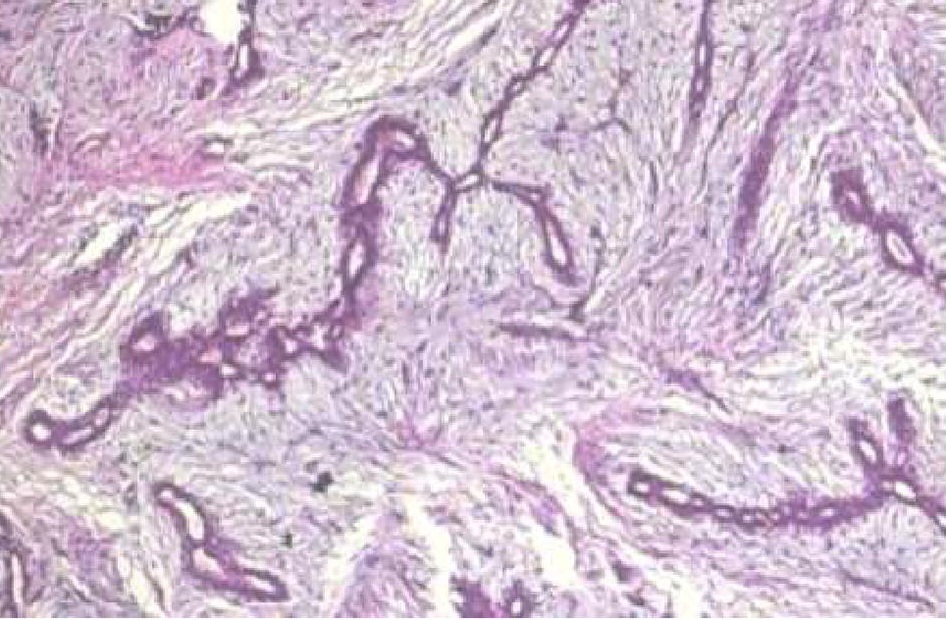
Breast tissue histopathology — H&E stained section
Breast cancer diagnosis is challenging due to the biological complexity and heterogeneity of breast tissue. A single specimen may contain benign changes, pre-invasive lesions such as ductal carcinoma in situ (DCIS), invasive carcinoma, inflammation, and fibrosis. Critical distinctions — like atypical hyperplasia versus low-grade DCIS, or identifying microinvasion — are often extremely subtle and further complicated by sampling limitations, particularly in core needle biopsies.
"Digital pathology introduces very large image files and navigation challenges — together making breast cancer diagnosis one of the most demanding tasks in routine pathology practice."
A gynaecologic malignancy on the rise — where subtle morphological differences and molecular complexity make early, accurate diagnosis exceptionally difficult.
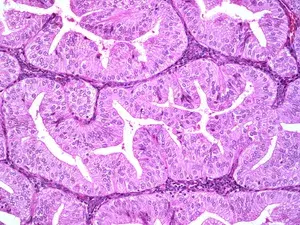
Endometrial histology — glandular architecture
From a pathology perspective, endometrial cancer diagnosis is challenging because of the broad morphologic spectrum and overlap with benign and premalignant conditions. Pathologists must carefully distinguish normal endometrium, hyperplasia, atypical hyperplasia (EIN), and well-differentiated endometrioid carcinoma — often using small biopsy or curettage samples that may not represent the entire lesion.
Subtle differences in gland architecture and cytologic atypia, combined with sampling limitations, can make early or low-grade cancers particularly difficult to identify with confidence.
"Together with rising workloads and the transition to digital pathology, endometrial cancer diagnosis is a cognitively demanding and high-stakes task in routine practice."
ManaScan and Pathora are designed specifically to tackle the diagnostic bottlenecks across cervical, breast, and endometrial cancer pathways.